
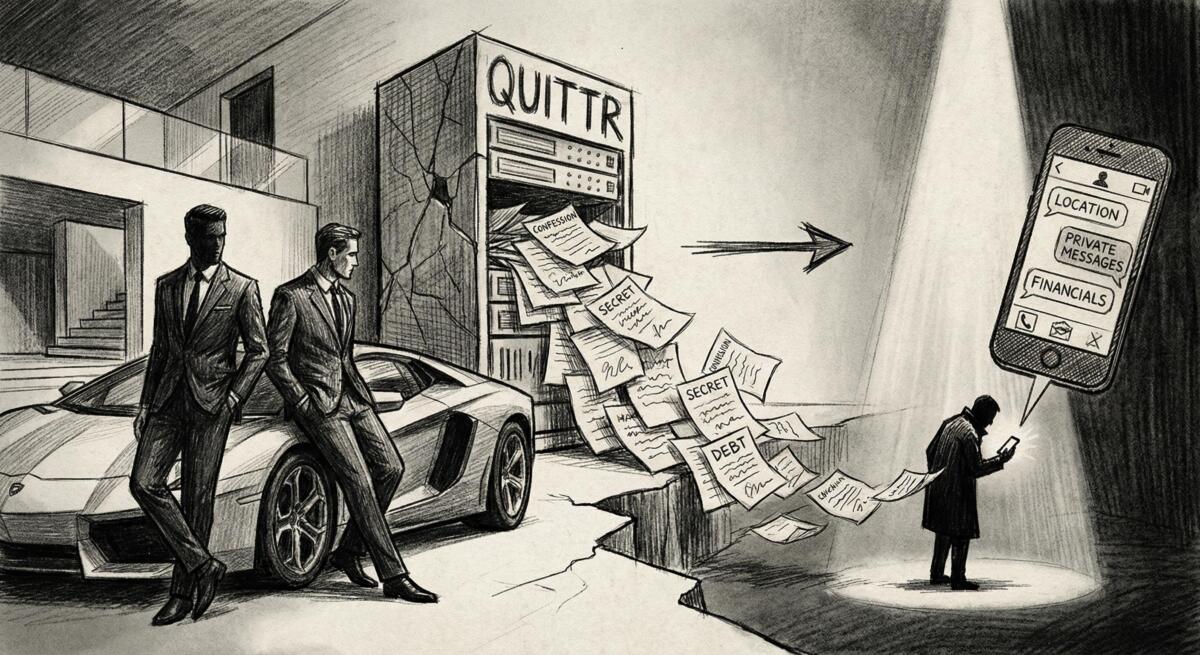
An article published in 404 Media reveals that Quittr, a viral app promising to help men overcome pornography addiction, exposed intimate data on hundreds of thousands of users, including their masturbation habits and personal confessions, for months after being notified of the security flaw. Many of the exposed users were minors.
When “Helping” Becomes Exploiting
Two guys in their early twenties built an app specifically targeting vulnerable people struggling with shame and addiction. They marketed it as a tool for men to “become men again.” Then, when a security researcher privately told them their app was leaking users’ most intimate secrets, they… did nothing. For months.
The founders, Alex Slater and Connor McLaren, are part of the so-called “App Mafia”, a group of young developers who brag about making millions from mobile apps. Slater claims Quittr pulls in $500,000 a month and has been downloaded 1.5 million times. That’s serious money. Money that apparently couldn’t be bothered to fix a security hole that exposed the private struggles of 600,000 people, including 100,000 minors.
When confronted, Slater first admitted the problem and promised to fix it “in the next hour.” Then, months later when a journalist called him back, he flat-out lied and said there was no issue. Classic move: deny, deflect, hang up the phone.
The Data They Leaked
The exposed information included:
- Users’ ages
- How often they masturbate
- How viewing pornography makes them feel
- Personal confessions written in moments of vulnerability
One confession read: “I just can’t do this man I honestly don’t know what to do know more, such a loser, I need serious help.”
Imagine being that person. Imagine reaching out for help through an app, trusting it with your most private struggles, only to have that data sitting exposed online where anyone with basic technical skills could access it. Forget “data breach”, this is a betrayal of people at their most vulnerable.
And let’s be clear, this data is extortion gold. Hackers love this stuff. They can threaten to expose someone’s porn habits to their family, friends, or employer unless they pay up. It happens constantly.
The Toxic Economics of “Helping”
Quittr probably does help some people. Apps that track habits, offer accountability, and provide community support can be genuinely useful. The problem isn’t the concept, it’s who’s running it and why.
McLaren told New York Magazine they started by asking “How can we build an app to make money?” That’s the honest part. The passion project rhetoric came later, probably around the time they realized mentioning “helping men become men again” plays well in certain circles and drives downloads.
This is modern tech in a nutshell: identify vulnerable people, build something that claims to help them, monetize their data and attention, then act shocked when things go sideways.
The founders drove exotic supercars and lived in a Miami mansion while the intimate struggles of hundreds of thousands of users sat exposed online. They had the money. They had been warned. They just didn’t care enough to actually protect the people they claimed to be helping.
Why This Keeps Happening
Tech companies, big and small, have learned they can get away with this. The playbook is simple:
- Launch fast
- Ignore security until something breaks
- If caught, deny or minimize
- Fix it only when forced to (or when a magazine profile might embarrass you)
- Face zero real consequences
There’s no meaningful punishment for exposing user data. No CEO goes to jail. The company might pay a fine that’s a rounding error compared to their revenue. The founders still keep their supercars.
Meanwhile, the users whose data was exposed? They get nothing. No notification. No compensation. Just the quiet anxiety of wondering who saw what, and whether their personal struggles will come back to haunt them.
What You Can Do?
If you use apps that deal with sensitive personal information, mental health, addiction recovery, sexual habits, finances, you are trusting a stranger with your secrets. Never trust anyone with your deepest secrets or intimate details, especially not an app.
Remember:
- Before downloading any app that deals with sensitive data, ask: Who made this? What’s their incentive? Do they have a history of protecting users?
- Read the privacy policy (yeah, I know, it sucks, but skim it at least) and understanding if has it ever been audited or enforced.
- Assume anything you put in an app could someday be exposed.
- Remember: if an app is free or cheap, you’re probably the product.
Quittr eventually fixed its security flaw, but only after a major magazine profiled its founders and someone checked again. That’s not how protecting vulnerable people is supposed to work.
Read the original article here if you want to learn more: Viral ‘Quittr’ Porn Addiction App Exposed the Masturbation Habits of Hundreds of Thousands of Users
Subscribe to our newsletter to get updates delivered to your inbox