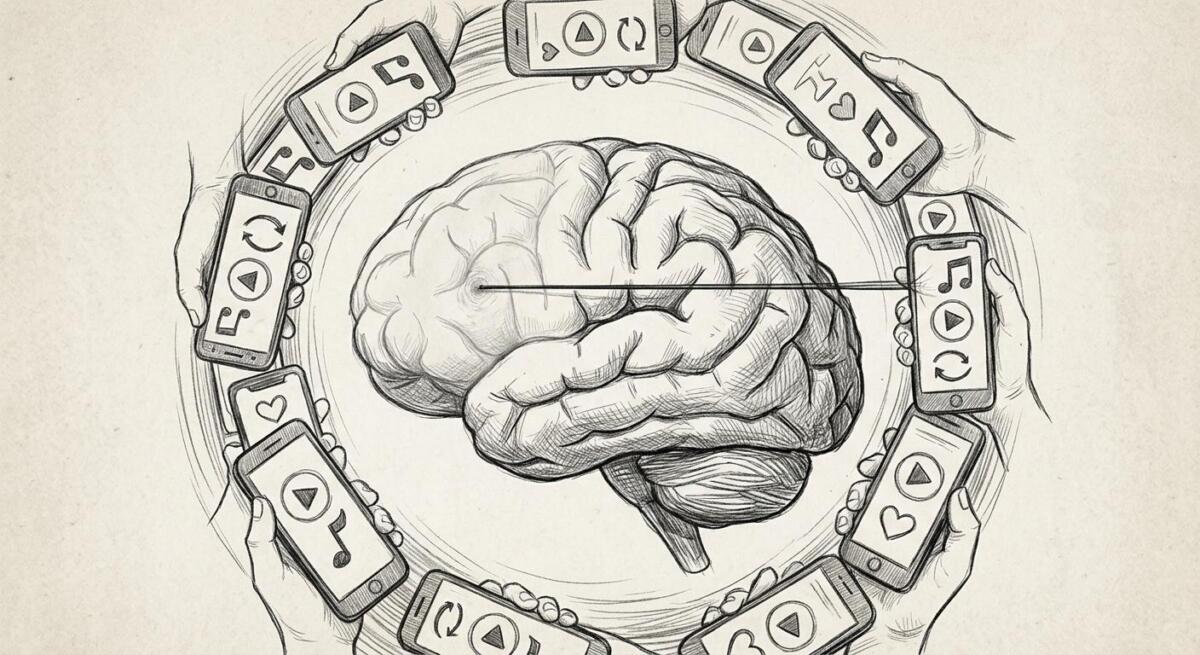
An article published in Dexerto highlights a 2024 study from China’s Zhejiang University that found a direct correlation between heavy consumption of short-form video content, such as TikTok, Instagram Reels, and YouTube Shorts, and reduced executive control in the brain. The research, which monitored 48 participants using EEG technology during cognitive tests, showed that people who regularly consume this type of content displayed weaker activity in the prefrontal cortex, the part of the brain responsible for focus, impulse control, and decision-making.
Your Brain Wasn’t Built for This
Short-form video platforms were designed to be addictive. That’s not speculation, it’s their business model. The entire user experience is engineered around keeping you scrolling: endless feeds, autoplay, algorithm-driven personalization, and content optimized for instant gratification. These platforms don’t want you to watch one video and leave. They want you locked in, swiping through hundreds of clips, each one triggering a tiny dopamine hit that keeps you coming back for more.
What this study reveals is that this design actually changes how your brain functions. Participants who reported higher levels of short-form video consumption showed measurably weaker brain activity in the frontal midline region during tasks that required focus and impulse control. Even when their outward performance looked normal, their brains were working differently, struggling to engage the neural circuits responsible for executive control.
You’re not just distracted, your brain is slowly losing its ability to regulate itself.
The Hidden Trade-Off: Engagement for Control
Here’s the part that should concern you: these platforms know what they’re doing. They have access to massive amounts of user data. They know how long you watch, what makes you stop scrolling, what keeps you engaged. And they use that data to refine the algorithm, making the content even more addictive.
The trade-off is simple:
- What they gain: Your time, your attention, your data, and ultimately, your money (through ads and brand partnerships).
- What you lose: Your ability to focus, regulate impulses, and think critically.
The study found that people with stronger addictive tendencies toward short-form video had reduced prefrontal theta activity, a neural marker of cognitive control, specifically when their brains were asked to resolve conflict or make decisions. In other words, the more you consume, the harder it becomes for your brain to do the work of thinking, choosing, and resisting impulses.
Sadly, you don’t notice it day-to-day. Your performance might still look fine on the surface. But underneath, your brain is being reshaped by an algorithm optimized for profit, not your well-being.
Why This Affects You (Even If You Don’t Use These Apps)
You might think, “I don’t use TikTok, so this doesn’t apply to me.” But the logic of short-form content has spread everywhere. YouTube Shorts. Instagram Reels. Even traditional platforms like Facebook and X (formerly Twitter) now prioritize bite-sized, rapid-fire content designed to maximize engagement.
This isn’t just a “kids these days” problem. It’s affecting how we all consume information, form opinions, and engage with the world. When your brain gets used to constant stimulation and instant rewards, longer-form thinking becomes harder. Reading an article feels like work (thank you for reading this article). Watching a full documentary feels impossible. Having a conversation without checking your phone feels unbearable.
The result? A society where fewer people can sustain attention long enough to think critically, evaluate competing ideas, or engage in the kind of deep focus required for complex problem-solving. And that’s exactly the environment where misinformation thrives, where manipulation becomes easier, and where people become more reactive and less reflective.
The Science of Shrinking Focus
If this trend continues unchecked, we’re looking at a generation (and frankly, multiple generations) whose brains have been fundamentally reshaped by platforms designed to exploit their attention. The consequences are serious:
- Mental health: Increased anxiety, depression, and stress, already linked to heavy social media use, will likely worsen as people lose the ability to self-regulate.
- Critical thinking: A population that can’t focus long enough to analyze information is more vulnerable to manipulation, propaganda, and poor decision-making.
- Social trust: When everyone’s worldview is shaped by algorithmically curated echo chambers, shared reality breaks down, and so does the ability to have productive conversations.
This isn’t inevitable. You can take back control. Start by being aware of how these platforms are designed to hook you. Set boundaries, limit your time, turn off autoplay, delete apps you don’t genuinely need. Treat short-form content like junk food: fine in moderation, dangerous when it becomes your main diet.
Most importantly, remember that these platforms don’t care about your well-being. They care about your engagement. And the more you understand that, the easier it becomes to resist.
Read the original article here if you want to learn more: YouTube Shorts and Instagram Reels are making you dumber, according to science
Subscribe to our newsletter to get updates delivered to your inbox