
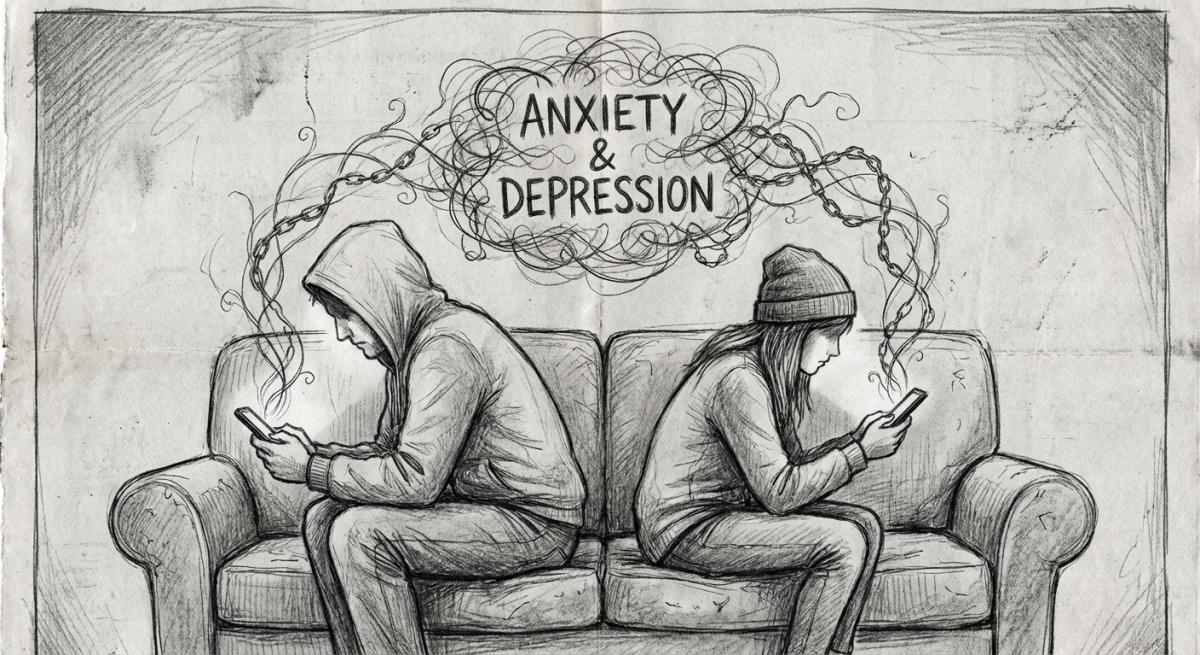
A new study published in Psychology Research and Behavior Management, Parent-Adolescent Mobile Phone Addiction and Mental Health: Actor-Partner Effects in 4,633 Chinese Dyads, examines how mobile phone addiction in parents and adolescents influences depression and anxiety within families. The research, based on a large sample of 4,633 parent-child pairs in China, found that excessive phone use is strongly linked to poorer mental health in both groups, and that these effects spill over between parents and their children.
The Family That Scrolls Together, Suffers Together
This study isn’t just about teens glued to TikTok or parents doomscrolling at dinner. It’s about how digital addiction doesn’t happen in a vacuum, it spreads through families like a contagion, worsening mental health for everyone involved. The findings are stark:
- Direct harm (actor effects): Heavy phone use strongly predicts depression and anxiety in both parents and adolescents. The more addicted a person is to their device, the worse their mental health.
- Spillover harm (partner effects): A parent’s phone addiction doesn’t just hurt them, it also raises their child’s risk of depression and anxiety. The same goes in reverse: a teen’s compulsive scrolling makes their parents more anxious and depressed too.
- A vicious cycle: Families get trapped in feedback loops where stress leads to more screen time, which then deepens mental health struggles, which then drives even more escapism into devices.
The study uses a framework called the Actor-Partner Interdependence Model (APIM), which is a fancy way of saying: Your habits don’t just affect you. They rewire the emotional climate of your whole household.
How Tech Design Fuels the Fire
This isn’t just a story about “bad parenting” or “irresponsible teens.” It’s about how modern technology is engineered to exploit human psychology, and how families, the bedrock of emotional support, are collateral damage in the attention economy.
1. The Attention Economy’s Toll on Families
Social media, games, and even “productivity” apps are designed to hijack focus, trigger dopamine hits, and maximize time spent. Features like infinite scroll, autoplay, and push notifications aren’t accidents; they’re deliberate mechanisms to keep users hooked. When parents and teens are constantly pulled into their screens, real-world interactions—such as eye contact, active listening, and emotional attunement, get crowded out.
- For parents: Distracted parenting isn’t just annoying – it’s emotionally harmful. Kids whose parents are glued to phones report feeling ignored, unimportant, and anxious. Studies show that even brief parental phone use during interactions can make children more likely to act out or withdraw.
- For teens: Adolescents are hardwired for social validation, and platforms like Instagram and TikTok weaponize that need. The constant comparison, fear of missing out (FOMO), and algorithmically amplified drama create a perfect storm for anxiety and depression.
2. The Myth of “Harmless” Screen Time
Tech companies love to frame screen time as a personal choice: “Just put the phone down!” But that ignores how addictive these products are by design. A few key problems:
- Algorithms prioritize engagement over well-being. YouTube’s recommendation system, for example, is optimized to keep you watching, not to make you happier. The longer you stay, the more ads you see, and the more data they collect.
- Notifications are psychological landmines. That ding from a text or like isn’t just a sound; it’s a Pavlovian trigger that conditions your brain to crave the next hit.
- The “always-on” culture erodes boundaries. Work emails bleed into family time. School group chats demand instant replies. There’s no more downtime to just exist, and that’s exhausting for everyone.
3. Who Benefits? (Hint: Not You)
While families struggle, a handful of corporations profit:
- Ad revenue: More screen time = more ads = more money for Google, Meta, and TikTok.
- Data harvesting: Every swipe, like, and pause is tracked, analyzed, and sold to advertisers.
- Market expansion: The younger they hook users, the longer they can monetize their attention. (That’s why apps like YouTube Kids exist.)
Meanwhile, mental health systems are overwhelmed, schools scramble to address rising anxiety, and parents are left feeling guilty, even though they’re up against billion-dollar behavioral engineering.
Breaking the Cycle: What Can Actually Help?
This study isn’t just a diagnosis, it’s a call to reclaim agency over how technology shapes our lives. Here’s what we can do:
For Individuals & Families
- Set “tech-free zones.” No phones at meals, before bed, or during conversations. (Yes, parents, this means you too.)
- Use tools to fight the algorithm. Turn off notifications, set app limits (iOS Screen Time, Android Digital Wellbeing), and delete the most addictive apps.
- Model healthy behavior. Kids mimic what they see. If you’re constantly on your phone, they’ll assume that’s normal.
- Replace screen time with real connection. Board games, walks, cooking together, anything that rebuilds face-to-face interaction.
For Society
- Demand better design. Tech companies could build less addictive products,they choose not to. Pressure them to:
- Default to finite scroll (no endless feeds).
- Ban manipulative features for minors (like Snapchat streaks).
- Disclose addiction risks like cigarette warnings.
- Push for policy changes. Governments should:
- Regulate surveillance advertising (the business model driving addiction).
- Fund digital literacy programs in schools.
- Tax data-harvesting business models to incentivize ethical design.
- Support mental health resources. Schools and workplaces need more counselors, not more screens.
For Tech Workers & Designers
If you build these products, you have a moral responsibility. Ask yourself:
- Is this feature helping users, or just keeping them hooked?
- Would I want my own kid using this?
- What if we designed for well-being first?
The Bigger Picture: This Isn’t Just About Phones
This study is a microcosm of a much larger crisis: We’ve handed over our attention, our relationships, and even our mental health to corporations that profit from our distraction. The same forces that make parents and teens anxious and depressed also:
- Erode democracy (misinformation, polarization).
- Widen inequality (attention = money, and the richest companies hoard both).
- Destroy the planet (data centers guzzle energy; e-waste poisons communities).
We don’t have to accept this. Technology can connect us, educate us, and empower us, but only if we demand that it serves humans, not the other way around.
Read the original article here if you want to dive deeper into the research.
Subscribe to our newsletter to get updates delivered to your inbox