
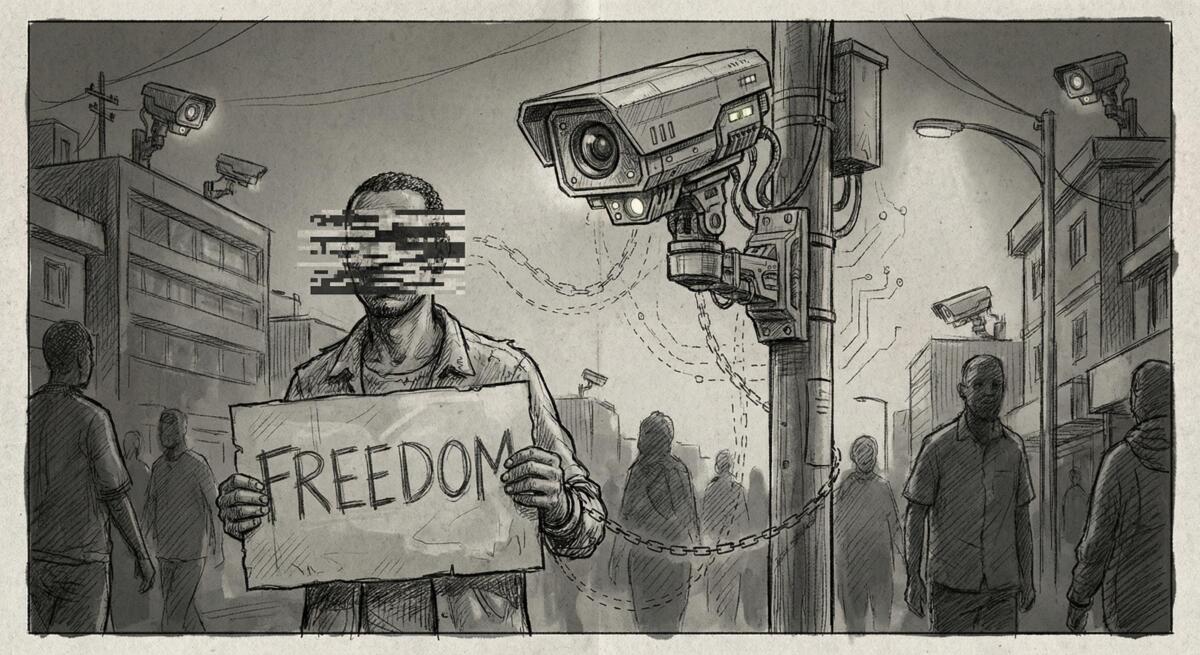
The Guardian published a detailed investigation revealing that at least 11 African governments have spent over $2 billion on Chinese-built AI surveillance systems that use facial recognition, biometric data collection, and vehicle tracking. These systems were sold as tools to modernize cities and reduce crime, but researchers warn they’re being used to monitor activists, arrest protesters, and silence journalists.
The “Smart City” Bait-and-Switch
Here’s how the pitch goes: Your city is growing fast. Crime is a problem. Traffic is a nightmare. What you need is a “smart city” solution, sleek cameras, facial recognition, AI-powered analytics. It’ll make everything safer, more efficient, more modern.
Sounds great, right? Except that’s not really what’s happening.
Countries like Nigeria ($470m spent), Egypt (6,000 cameras installed), and Uganda (5,000 cameras) have rolled out these systems with little to no regulation about how the data is collected, stored, or used. The technology was marketed as a crime-fighting tool, but researchers found “no real evidence” it actually reduces crime. What it does do extremely well is track people.
And when I say “people,” I mean activists, journalists, protesters, and anyone a government might consider inconvenient.
The Real Product Is Control
Let’s be clear, surveillance technology can help solve crimes and improve public safety when it’s targeted, transparent, and accountable. A camera at a bank or a traffic light makes sense. But that’s not what we’re talking about here.
What we’re talking about is mass surveillance, systems designed to watch everyone, all the time, and store that data indefinitely. The justification is always “national security,” but the actual use cases tell a different story:
- Kenya: Used surveillance tech to crack down on gen Z-led protests
- Uganda: Facial recognition systems deployed to monitor activists
- Algeria: Street protests in 2019 and 2021 led to political change,now there’s concern the surveillance systems will make people too afraid to protest in the future
This is about making sure people think twice before speaking up, organizing, or challenging power. As Yosr Jouini, one of the report’s authors, put it: there’s a “chilling effect” on people’s willingness to participate in public gatherings because they know they could be tracked, identified, and arrested.
That’s intimidation with a fancy interface.
No Rules, No Oversight, No Problem
Sadly, most of these systems have been rolled out with zero legal framework for how the data can be used. No rules about retention. No transparency about who has access. No accountability when it’s abused.
And when laws do get introduced? They often make things worse. As Bulelani Jili from Georgetown University points out, laws around surveillance can just as easily be used to legitimize government overreach. In many cases, “cybercrime” laws are written so vaguely that ordinary people can be criminalized for their social media posts.
So you end up in this nightmare scenario where governments can watch you constantly, arrest you for what you say online, and claim it’s all perfectly legal because they wrote the rules.
Sold by China, Funded by Loans, Paid for by Citizens
Most of this tech was bought with loans from Chinese banks. So African countries are going into debt to build surveillance infrastructure that doesn’t reduce crime, violates privacy, and suppresses dissent.
The average spend across the 11 countries? $240 million each. That’s money that could’ve gone toward healthcare, education, or actual infrastructure. Instead, it’s funding a system that watches people and collects their biometric data without consent.
Chinese companies package this tech beautifully, CCTV, facial recognition, vehicle tracking, all in one tidy bundle. It’s presented as a path to modernization. But as the report makes clear, what’s being modernized isn’t the city. It’s the ability to control the population.
When Security Cameras Become Digital Shackles
You might be reading this and thinking, “Well, I don’t live in Africa, so this doesn’t affect me.” Wrong.
This is a global playbook. The same technology being deployed in Lagos and Nairobi is being developed, tested, and normalized everywhere. Once mass surveillance becomes standard in one part of the world, it becomes easier to justify everywhere else. “Other countries are doing it” is a hell of a sales pitch.
And the logic is always the same: We need this for security. Trust us. Don’t worry about the details.
And once these systems are in place, they don’t go away. They expand. And the people who control them rarely use them in ways that benefit regular citizens. They use them to maintain power, silence critics, and monitor anyone who might challenge the status quo.
If you care about privacy, freedom of speech, or the ability to protest without being tracked and punished, then you should care about this. Because the precedent being set right now will shape the next decade of how governments and corporations treat our digital lives.
You’re not powerless here. Support organizations fighting for digital rights. Push for transparency around surveillance tech in your own community.
The future isn’t written yet. But if we stay quiet, someone else will write it for us.
Read the original article here if you want to learn more: ‘Invasive’ AI-led mass surveillance in Africa violating freedoms, warn experts
Subscribe to our newsletter to get updates delivered to your inbox