
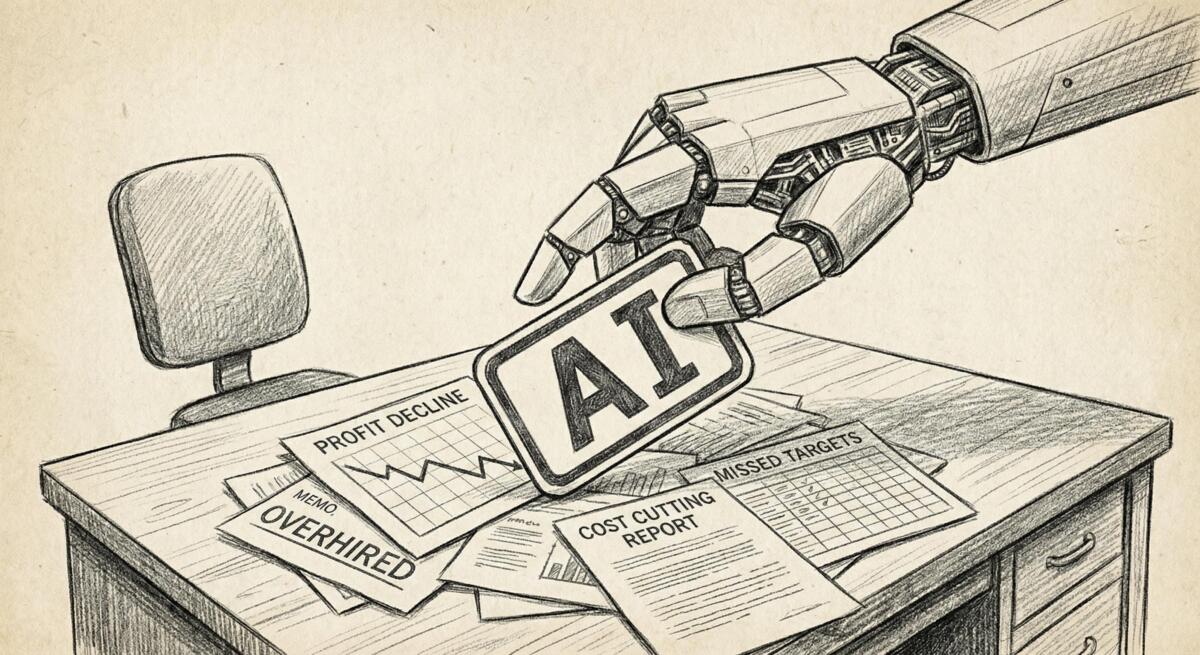
If it wasnt already bad enough that AI is screening and rejecting candidates, an article published in The New York Times examines a troubling new trend: companies announcing tens of thousands of layoffs while citing artificial intelligence as the primary reason. According to research firm Challenger, Gray & Christmas, AI was mentioned in announcements for more than 50,000 layoffs in 2025 alone, with major companies like Amazon, Pinterest, and Hewlett-Packard all pointing to AI-driven transformation as justification for cutting staff.
The Perfect Corporate Excuse
Here’s what’s actually happening: Companies are firing people now based on what AI might do later. Amazon’s CEO Andrew Jassy said the company expects generative AI to “reduce our total corporate workforce” in the coming years. Pinterest cut 15% of its employees to “reallocate resources to AI-focused roles.” HP announced 6,000 job cuts tied to AI integration.
Notice something? These aren’t replacements. These are predictions. The AI systems that will supposedly do these jobs often don’t exist yet, or aren’t mature enough to actually replace human workers. As Forrester Research pointed out, “Many companies announcing AI-related layoffs do not have mature, vetted AI applications ready to fill those roles.”
This is what researchers are calling “AI-washing”—using AI as a convenient cover story for layoffs that might have completely different causes, like overhiring during the pandemic, missing financial targets, or needing to free up cash for expensive AI infrastructure investments.
Why Companies Love This Story
Blaming AI for layoffs serves multiple corporate purposes:
- It sounds forward-thinking. Telling investors “we’re cutting edge and adopting AI” is much sexier than admitting “we made bad planning decisions” or “the business is struggling.”
- It’s politically safer. In an environment where criticizing tariffs or government policies could draw presidential anger, AI makes a convenient scapegoat.
- It shifts responsibility. Technology becomes the villain instead of executive decision-making or short-term profit chasing.
As Molly Kinder from the Brookings Institution notes, it’s a “very investor-friendly message” that helps stock prices while avoiding uncomfortable questions about why the company is really cutting costs.
The Human Toll That Nobody’s Counting
Here’s the part that gets lost in all the corporate strategy talk, real people are losing their jobs right now based on technology that might never actually replace them. Over 700,000 tech workers globally have been laid off since 2022. That’s 700,000 people suddenly without income, health insurance, or stability—many of them let go not because AI can do their work, but because executives want to tell a compelling story to Wall Street.
And here’s the sick irony, even when AI does eventually arrive to justify these cuts, studies show it hasn’t meaningfully transformed the job market yet. A Yale Budget Lab study found that AI’s actual impact on employment has been minimal so far. These are anticipatory layoffs—companies firing people based on a future that may or may not arrive, leaving workers to bear the consequences of corporate fortune-telling.
What This Means For Everyone
This isn’t just about tech workers. This pattern establishes a dangerous precedent – companies can justify mass layoffs by invoking AI, whether or not the technology actually exists to replace those workers. It’s a get-out-of-jail-free card for bad planning, financial pressure, or simple cost-cutting.
If this continues unchecked, we’re looking at a future where “AI is coming” becomes the standard excuse for any corporate restructuring, making it impossible to hold companies accountable for decisions that destroy livelihoods. Workers lose their jobs. Executives get applause for being “innovative.” And the technology that supposedly made it all necessary might not even materialize as promised.
We need to recognize that when corporations hide behind technology to explain human costs, they’re counting on us being too dazzled by the buzzwords to notice who’s actually paying the price.
Read the original article here if you want to learn more: Did A.I. Take Your Job? Or Was Your Employer ‘A.I.-Washing’?
Subscribe to our newsletter to get updates delivered to your inbox