
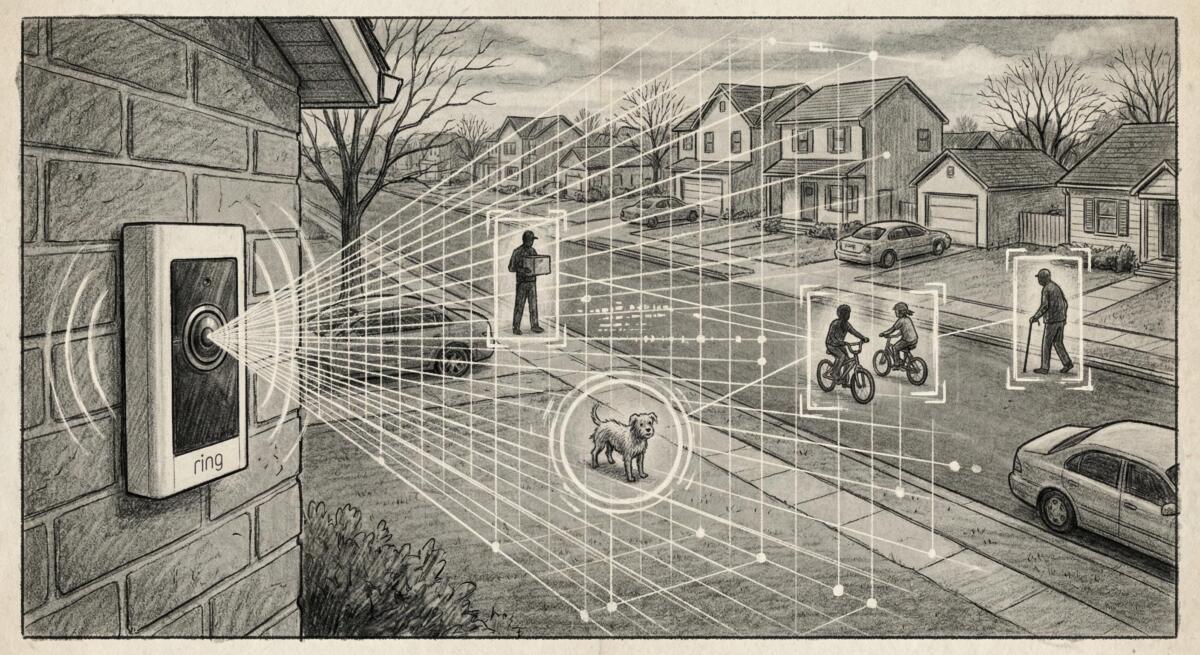
An article published in 404 Media reveals internal emails from Ring’s founder Jamie Siminoff suggesting the company’s AI-powered “Search Party” feature, currently used to find lost dogs, is just the beginning of a much broader surveillance system that the company hopes will “zero out crime in neighborhoods.”
From Finding Fido to Watching Everyone
Ring rolled out Search Party in October as an on-by-default feature that networks neighborhood cameras together and uses AI to scan for lost dogs. Sounds helpful, right? And it is, if you’ve lost your pet, having dozens of cameras automatically scanning for them could genuinely save you hours of worry and searching.
But here’s the thing: the feature was never really about dogs.
Siminoff’s internal email makes this clear. He describes Search Party as a “foundation” and says it will “unlock the impact of our mission” to eventually “zero out crime in neighborhoods.” The dog-finding feature is essentially a beta test for a much larger automated surveillance network. It’s a friendly entry point, who could object to finding lost pets?, that gets people comfortable with the idea of AI constantly scanning and analyzing everything captured by their cameras.
The emails also show Siminoff pushing employees to monitor social media for criticism of Ring’s “Community Requests” feature, which lets police ask Ring owners for footage. When Charlie Kirk was killed, Siminoff sent employees an Instagram Reel about the investigation and praised how the tool would create “the conduit for public service agencies to efficiently work with our neighbors.”
The Surveillance Infrastructure Is Already Being Built
Ring isn’t just planning future surveillance features, they’re actively rolling them out:
- Familiar Faces: Uses facial recognition to identify specific people on your camera
- Fire Watch: AI that alerts you to nearby fires
- Community Requests: Direct pipeline from police to your doorbell camera footage
Each feature sounds reasonable in isolation. Facial recognition for family members? Convenient. Fire alerts? Potentially lifesaving. Helping police with investigations? Being a good citizen, right?
But together, they form something much larger: a comprehensive, AI-powered neighborhood surveillance system where cameras don’t just record, they actively analyze, categorize, and share what they see. And crucially, most of this happens by default. You have to opt out, not in.
Who Actually Benefits From “Zero Crime”?
Siminoff’s vision of “zeroing out crime” sounds appealing until you think about what it actually requires: constant, automated surveillance of everyone in a neighborhood, analyzed by AI systems that will inevitably make mistakes, reinforce biases, and track people who have committed no crime.
Ring built its business by partnering with police departments, essentially creating a distributed law enforcement surveillance network funded by homeowners. When Siminoff briefly left the company, those partnerships were scaled back. When he returned, they immediately ramped back up. That tells you everything about the company’s real priorities.
The people who benefit most aren’t necessarily the homeowners who buy these cameras. Amazon (which owns Ring) gains massive amounts of data. Law enforcement gets surveillance infrastructure they didn’t have to build or fund. And Siminoff gets to build toward his vision of a “zero crime” neighborhood, whatever that actually means.
Meanwhile, the people who pay are neighbors who happen to walk past Ring cameras, delivery drivers whose faces are scanned dozens of times per shift, teenagers hanging out on their own street, and anyone else whose daily movements are now being logged, analyzed, and potentially shared with police, whether they consented to any of this or not.
Big Brother Is Watching
This isn’t about whether technology can help find lost dogs or prevent crime. It obviously can. The issue is that we’re normalizing comprehensive neighborhood surveillance without having any serious conversation about the implications.
Every time you walk past a Ring camera, AI might now be analyzing you, checking if you match a lost dog owner, a “familiar face,” or potentially in the future, some other category Ring decides to scan for. Your neighborhood is being turned into a datafied space where your movements are logged, and your presence is analyzed, and you never agreed to any of it.
If Ring achieves Siminoff’s vision, we’ll end up with neighborhoods where AI constantly watches, categorizes, and reports on everyone, not because we chose that future, but because we accepted it one “helpful” feature at a time. The infrastructure is being built right now, hidden behind lost dogs and fire alerts.
What you can do: Check if you or your neighbors have Ring cameras. Understand that these aren’t just recording devices, they’re AI-powered surveillance systems that are on by default. Ask yourself whether you’re comfortable with that level of monitoring in your daily life. If you own a Ring camera, dig into the settings and understand what you’re actually sharing and with whom. And maybe, just maybe, have a conversation with your neighbors about what kind of street you actually want to live on.
Read the original article here if you want to learn more: Leaked Email Suggests Ring Plans to Expand ‘Search Party’ Surveillance Beyond Dogs
Subscribe to our newsletter to get updates delivered to your inbox