
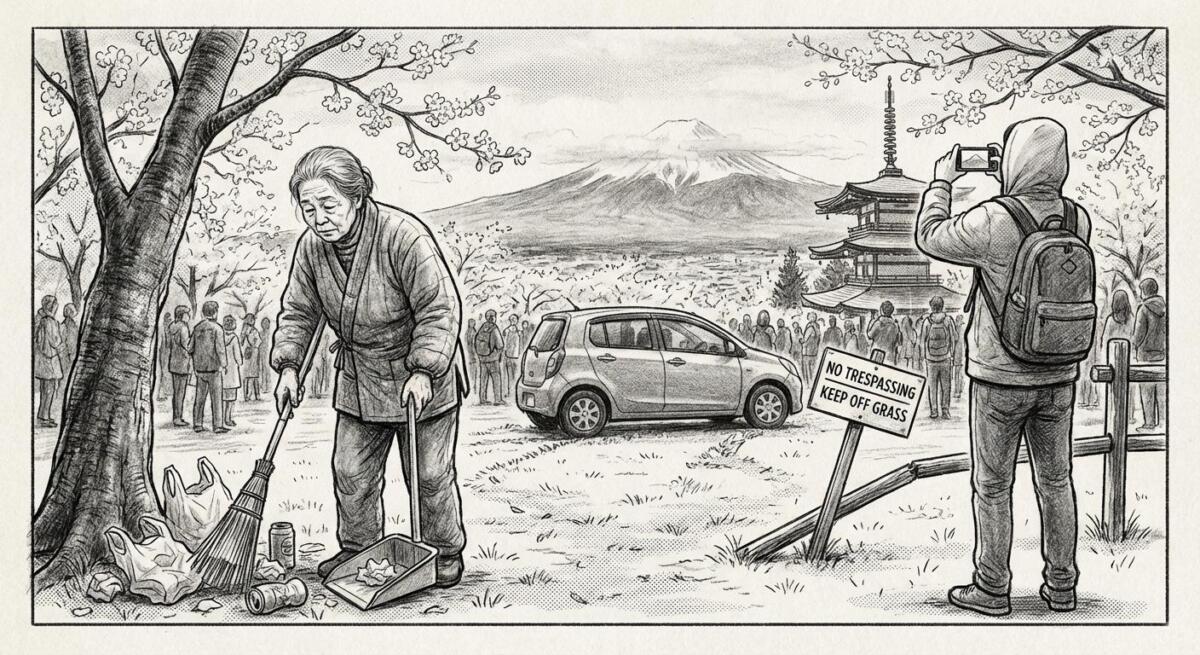
An article published in the BBC reports that the Japanese city of Fujiyoshida, located near Mount Fuji, has cancelled its annual cherry blossom festival due to overwhelming numbers of poorly behaved tourists. The city’s mayor cited chronic traffic congestion, littering, and reports of tourists trespassing on private property and defecating in residents’ gardens as key reasons for the decision.
When Instagram Ruins What It Claims to Celebrate
What started in 2016 as a well-intentioned effort to share Fujiyoshida’s natural beauty with the world has collapsed under the weight of social media-driven tourism. The city opened Arakurayama Sengen Park hoping to “enhance the area’s appeal” and create “a lively atmosphere.” They got exactly what they asked for, and then some. Now, up to 10,000 visitors descend on the town daily during peak cherry blossom season, not to experience the quiet reverence of sakura, but to capture the perfect shot for Instagram.
This is what happens when technology transforms genuine cultural experiences into content opportunities. The cherry blossoms haven’t changed. Mount Fuji hasn’t moved. What’s different is that platforms like Instagram have weaponized beauty, turning sacred natural moments into competition arenas where people chase likes, not meaning.
The BBC notes that this surge is partly due to “explosive popularity fueled by social media.” That’s a polite way of saying that algorithms designed to maximize engagement have turned a peaceful Japanese town into a photo studio. People aren’t visiting because they care about Japanese culture or the centuries-old tradition of hanami (flower viewing). They’re visiting because they saw someone else get thousands of likes for standing in the same spot.
The Real Cost of “Instagrammable Spots”
The damage goes beyond inconvenience. Residents report tourists opening their doors without permission to use bathrooms, trespassing on private property, littering, and, horrifyingly, defecating in private yards, then getting angry when confronted. This isn’t tourism. This is invasion.
These aren’t isolated incidents. Japanese authorities had to erect a giant black barrier in Fujikawaguchiko in 2024 to block what had become one of the country’s most popular Instagram backgrounds. The shot featured a convenience store with Mount Fuji rising behind it, a mundane scene transformed into viral gold. Tourists littered, parked illegally, and treated the neighborhood like a theme park.
Here’s what social media platforms won’t tell you: their algorithms don’t care about respecting local communities. They care about engagement. A photo of Mount Fuji with cherry blossoms gets engagement. So the algorithm shows it to more people. Those people want the same photo. The cycle repeats. Nobody at Instagram or TikTok has to deal with the tourist defecating in a Fujiyoshida resident’s garden. The town does.
This is the dark side of “discovery” on social media. These platforms promise to connect you with the world’s beauty, but what they actually do is commodify it, strip it of context, and turn it into a checklist item. The locals who live there? They become props in someone else’s content strategy.
This Isn’t About Hating Tourism
Tourism itself isn’t the enemy. People have traveled to see cherry blossoms for generations. What’s different now is the incentive structure. Before social media, you visited a place because you wanted to be there. You took photos for yourself, to remember the moment. Now, people visit because they need to prove to their followers that they were there. The experience is secondary. The content is primary.
And when the primary goal is content, people will do whatever it takes to get the shot, even if that means disrespecting the very place they’re supposedly there to appreciate. Why? Because the platforms reward it. Bad behavior doesn’t stop you from getting likes. In fact, more dramatic, boundary-pushing content often performs better.
Cities like Fujiyoshida are caught in an impossible position. They can’t control Instagram’s algorithm. They can’t make tourists care about their community. So they’re left with two choices: manage an endless flood of badly behaved visitors, or shut it down entirely. They chose the latter.
This pattern is spreading globally. Rome now charges €2 to access the Trevi Fountain viewing area. Venice charges day trippers €5 to €10 depending on when they book. These aren’t cash grabs, they’re desperate attempts to slow the destruction caused by social media-fueled overtourism.
Why This Matters to You
You might think this is just a problem for tourist destinations, but it’s not. The same incentive systems shaping tourism are shaping your daily life. Social media platforms are designed to turn everything, your vacation, your meal, your appearance, your relationships, into content. They’ve trained an entire generation to perform their lives instead of living them.
If current trends continue unchecked, more places like Fujiyoshida will close to the public. More communities will erect barriers, both literal and metaphorical, to protect themselves from the Instagram swarm. Cultural treasures will become off-limits, not because authorities are being restrictive, but because technology made it impossible to preserve them while keeping them open.
What can you do?
Start by questioning why you’re taking photos. Are they for you, or for your followers? When you visit a place, are you actually there, or are you just staging content?
Set boundaries with social media. Mute the accounts that make you feel like you’re missing out. Most importantly, understand that platforms profit when you treat your life like a highlight reel. They don’t care if that destroys the places you visit or leaves you feeling hollow afterward.
The cherry blossoms will still bloom in Fujiyoshida. The residents just want to enjoy them in peace again. And honestly, that shouldn’t be too much to ask!
Read the original article here if you want to learn more: Japanese city cancels cherry blossom festival over badly behaved tourists
Subscribe to our newsletter to get updates delivered to your inbox