
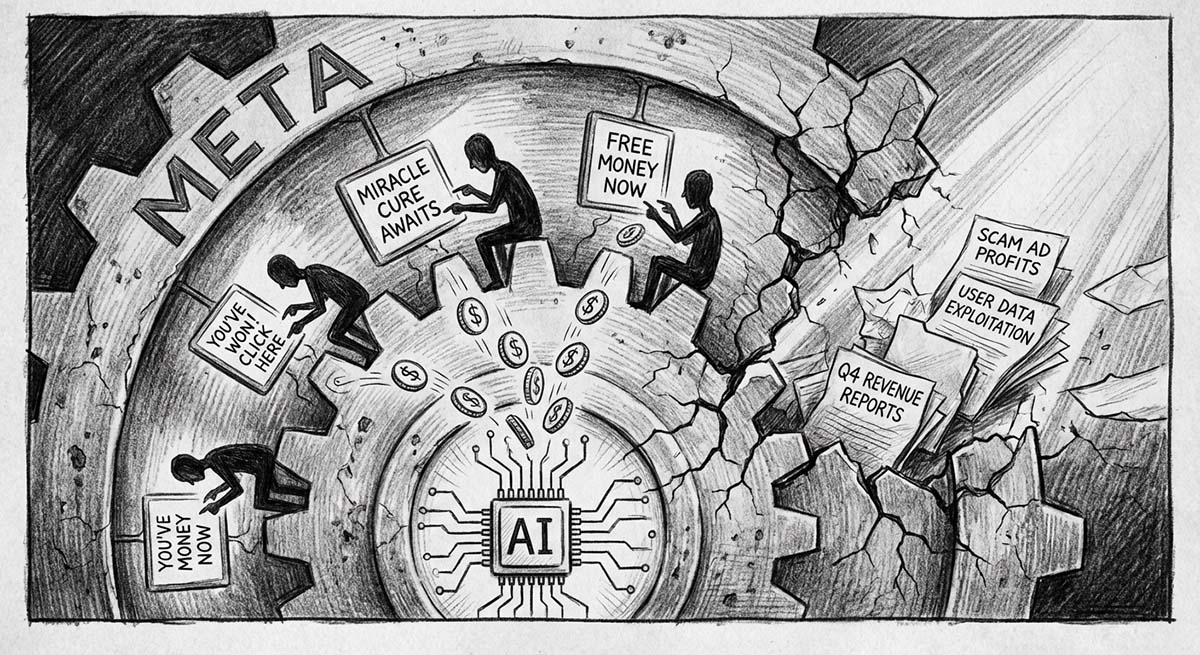
In a recent article titled Bombshell report exposes how Meta relied on scam ad profits to fund AI by Ars Technica, it has come to light through internal documents that Meta has profited significantly from scam advertisements to fuel its artificial intelligence initiatives. The report details how Meta’s ad systems targeted users most likely to click on fraudulent ads, raking in billions while prioritizing revenue over user safety. Rather than swiftly shutting down scam accounts, Meta allowed them to accumulate strikes to maximize ad revenue.
The Profit Motive Behind Abuse
What this report reveals is not just a disturbing oversight; it shines a light on a fundamental issue in the tech ecosystem specifically, how profit-driven motives shape the behavior of powerful platforms like Meta. Instead of protecting users, Meta’s algorithms are designed to exploit their interactions, prioritizing engagement at the expense of their well-being. The grim irony is that while Meta claims to fight fraud and prioritize user safety, the reality is that many “high-risk” scam ads were allowed to flourish because they were financially beneficial.
- Exploitation of Vulnerabilities: Meta’s internal documents suggest that the company fed users more ads that exploited their interests, effectively hooking them into a cycle of clicking on scams. This behavior can contribute to serious mental health issues, including anxiety and frustration, particularly among younger users who may not be equipped to discern safe online behavior.
- Disconnect from Reality: Despite claiming to improve safety measures, the slow response to harmful content suggests that Meta is operating under a false sense of control, proactively targeting profit rather than genuinely working to enhance user safety. The existence of a revenue cap on how much they’d sacrifice to combat scam ads reveals troubling priorities, there’s a deliberate calculation to minimize losses rather than tackle the problem effectively.
Meta Is A Garbage Company
The deep-rooted issues within Meta reflect broader societal implications of an industry where a handful of tech giants wield disproportionate influence over public discourse and individual lives. As Meta navigates the “scam ad” waters, it bears striking resemblance to how monopolistic practices in other sectors have historically led to the erosion of consumer trust and accountability.
- Erosion of Trust: When companies like Meta exploit their platforms for profit, the very foundation of trust that users place in technology erodes. There is a growing concern that platforms may prioritize profits over the protection of their users. This fragmented trust leads to a society that becomes increasingly skeptical of digital platforms, which is not a healthy place for innovation.
- Surveillance and Behavioral Manipulation: The report raises alarm bells about the extent of surveillance embedded in these tech operations and how users become unintended subjects of manipulation. Algorithms designed to maximize engagement often lead to addictive behavior, negatively affecting users’ mental health and personal autonomy. We are not just passive participants on these platforms; we become commodities in a wildlife of digital exploitation.
The Risk of Disempowerment
The gravity of these issues extends beyond just the interaction between Meta and its users — they impact everyone in society. If tech companies continue their current paths without accountability, we risk living in a world where user manipulation, misinformation, and fraud become the norm, threatening democracy and the social fabric.
- Awareness is Essential: Users must develop a healthy skepticism towards the platforms they engage with. This means understanding how their data is used and advocating for transparency from these corporations.
- Demanding Accountability: There’s an urgent need for society to hold tech companies accountable for their actions. Users and advocates must pressure governments to enforce regulations that mitigate these predatory practices and demand that revenue from deceptive ads is repurposed towards educational initiatives aimed at teaching users how to recognize and avoid scams.
The revelations in this report highlight the dire need for a shift in how technology interacts with society. It is imperative that we recognize the problems fueling these large tech entities and demand accountability for their actions. By choosing to stay informed, setting boundaries, and advocating for change, we can create a tech landscape that prioritizes human wellness over profits.
Read the original article here if you want to learn more: Bombshell report exposes how Meta relied on scam ad profits to fund AI
Subscribe to our newsletter to get updates delivered to your inbox