
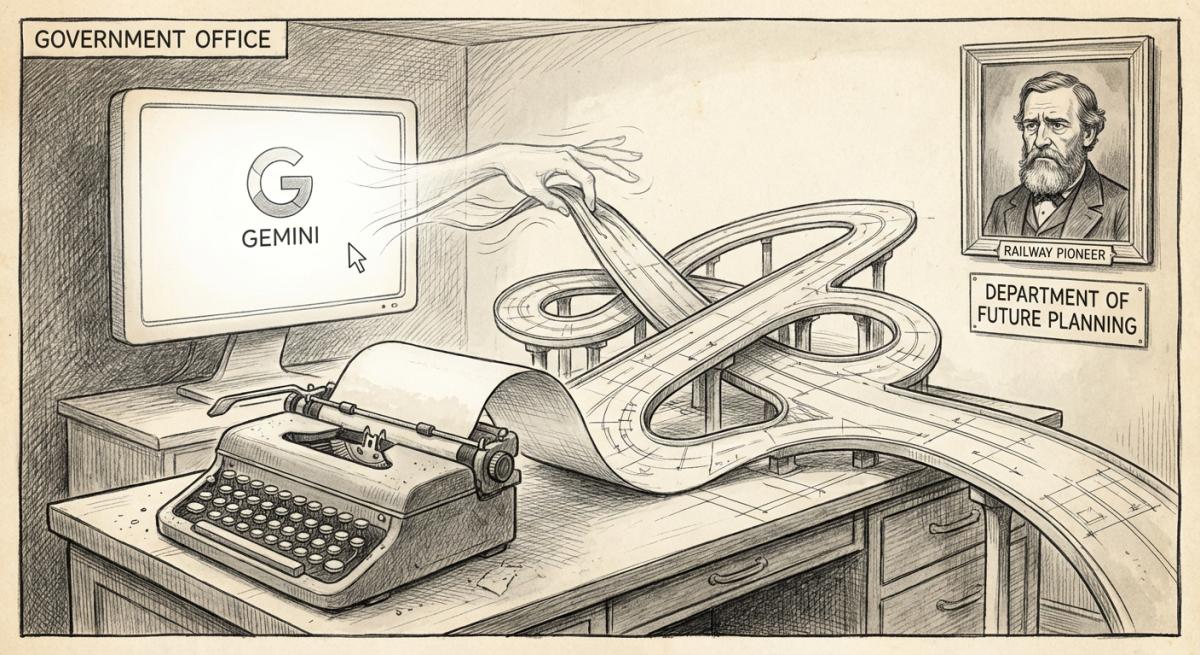
The ProPublica article “Trump DOT Plans to Use Google Gemini AI to Write Regulations” reveals that the U.S. Department of Transportation (DOT) intends to use Google’s AI, Gemini, to draft federal transportation regulations. The plan, advanced by the current administration, emphasizes speed over precision, raising concerns about outsourcing critical safety standards to technology known for its inaccuracies.
The Double-Edged Sword of Technological Efficiency
It’s easy to be enamored with the idea of using AI to streamline government processes. After all, if technology can help reduce red tape and speed up rulemaking, then why not embrace it? However, as the article points out, the excitement of adopting an AI-driven approach can quickly become a dangerous gamble. The DOT leadership seems to prioritize rapid results, cranking out regulations in record time, over the meticulous quality control required for issues that can literally dictate safety standards for air travel and hazardous materials transport.
Key Concerns:
- Inaccuracy: AI large language models like Gemini are notorious for producing “hallucinations,” or factual inaccuracies. The fact that the DOT is willing to overlook this potential pitfall in favor of increased speed demonstrates a troubling readiness to gamble with public safety.
- Loss of Expertise: There’s a concerning trend of decreasing professional staffing and expertise within government agencies. The article notes that the DOT has lost nearly 4,000 workers recently, including attorneys versed in regulatory frameworks. This erosion of talent raises the stakes even further: fewer skilled workers mean less human oversight on AI-generated documents.
The Real Cost of Fast-Tracking Innovation
The proposed use of AI in regulatory writing encapsulates a broader ethos prevalent in tech culture: speed is king. However, this rush overlooks fundamental questions of accountability, transparency, and ethical governance.
Examining the Incentives:
- Profit and Control: By adopting Gemini, DOT isn’t just seeking efficiency; it’s leveraging a technology that chains us to a profit-driven model where corporate interests can overshadow the public good. When regulatory bodies become too reliant on private-sector AI, we must wonder whose interests are being served.
- Algorithmic Manipulation: Fast, AI-driven decisions can lead to regulatory environments that favor large entities while neglecting the voices of small businesses or individual citizens. The risk is not just algorithmic error, but also the biases embedded within the systems.
Broader Impacts:
- Erosion of Trust: Rapid amendments to regulations without adequate public input can foster skepticism toward governmental effectiveness. Trust is hard-earned, and once lost, it can fracture the social fabric.
- Environmental Concerns: Additionally, this rush toward AI efficiency raises energy use concerns. The foot soldiers of this trend (data centers consuming substantial energy) inevitably contribute to climate challenges.
What’s At Stake for Everyday Americans
This isn’t a discussion reserved for bureaucrats and tech enthusiasts; it’s an issue that affects everyone. The speed and quality of regulations have direct consequences on public safety and environmental protection. Imagine a world where regulations, potentially crafted by an AI that lacks critical human judgment and situational awareness, are left unchecked.
If these trends continue, we’re looking at a future where human oversight is minimized, regulatory efficacy is compromised, and individuals face increased risks. In this landscape, there are actionable steps we can all take:
- Stay Informed: Understand how these technologies are integrated into public policy and its implications.
- Set Boundaries: As individuals and citizens, we can demand appropriate oversights, such as holding agencies accountable for using AI responsibly.
- Advocate for Transparency: Push for openness in how AI algorithms are designed and deployed, ensuring that public interests are prioritized over corporate gains.
Technology holds incredible promise, but it also harbors risks that we, as a society, can no longer afford to overlook.
Read the original article here if you want to learn more: ProPublica.
Subscribe to our newsletter to get updates delivered to your inbox