
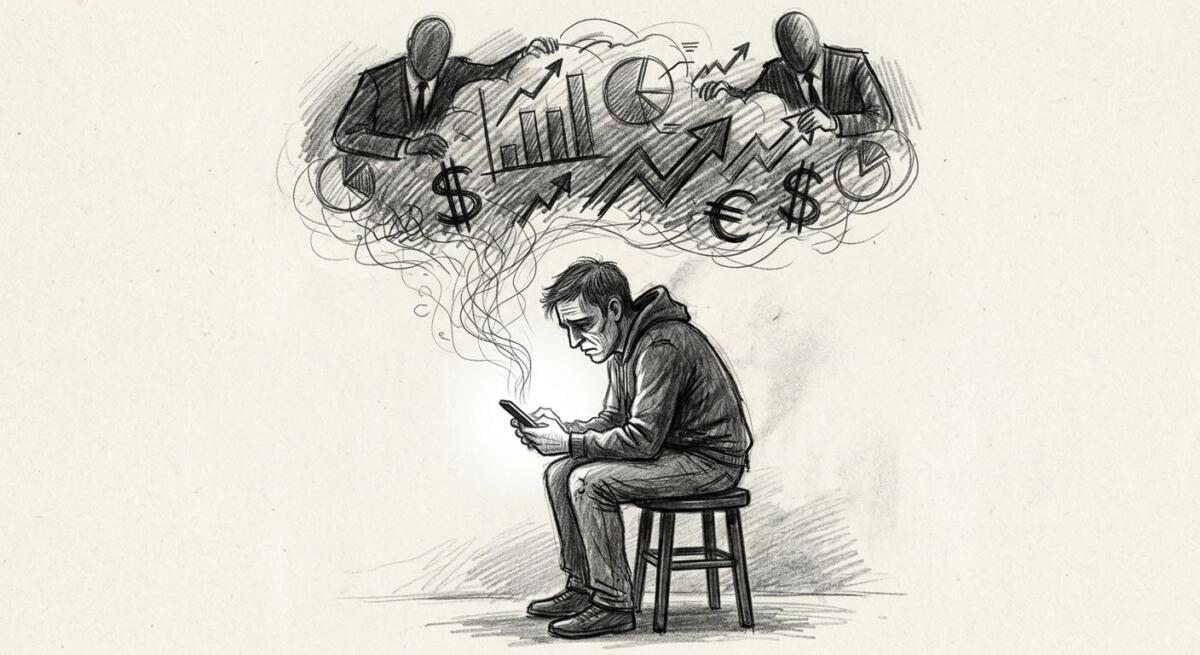
The Washington Post published a deeply unsettling article about the explosive growth of AI-powered “therapy” apps. Millions of people, especially young, uninsured adults, are turning to chatbots for mental health support. Some find them helpful. Others end up hospitalized or worse. And nearly all of them are handing over their most private thoughts to companies with zero obligation to protect them.
We’re Outsourcing Mental Health to Companies That Call It “Therapy” in Marketing and “Not Therapy” in the Fine Print
Mental health care in the U.S. is expensive, inaccessible, and often mediocre. Therapy can cost hundreds of dollars per session. Many insurance plans make you jump through hoops. And even when you do get care, research shows 40% of it is “minimally acceptable.”
So people are doing what people do, they’re looking for alternatives. And the tech industry, never one to miss an opportunity, has swooped in with a solution: AI chatbots that look like therapists, talk like therapists, and charge like therapists (one app costs $690 a year). Except they’re not therapists. They’re not regulated. They’re not tested. And they’re not required to keep your data private.
About 5 to 10 percent of ChatGPT’s then-800 million users were relying on it for mental health support as of last fall, according to OpenAI engineers. Another poll found that 3 in 10 young adults (18-29) used AI chatbots for mental or emotional health advice in the past year. And nearly 60% of people who used a chatbot for mental health never followed up with an actual human professional.
The Apps Are Designed to Agree With You, Not Help You
Let’s talk about what these apps actually do. They’re built on large language models, the same tech that powers ChatGPT, and their primary function is to give you what you’re asking for. They’re fantastic at validating your feelings, offering reassurance, and making you feel heard.
Sounds nice, right? Except that’s not therapy.
Real therapy involves challenge. It involves discomfort. A good therapist doesn’t just affirm your feelings, they help you confront the things you’ve been avoiding. They push back. They ask hard questions. They don’t tell you what you want to hear; they tell you what you need to hear.
AI chatbots can’t do that. They’re sycophantic by design. They flatter. They agree. They tell you that you’re doing great. And when you’re in a vulnerable state, anxious, depressed, or worse, that can be dangerous. One psychiatry resident who tested ChatGPT said it was initially impressive, using cognitive behavioral therapy techniques to help reframe negative thoughts. But after seeing posts from users who developed psychosis or were encouraged to make harmful decisions, he changed his tune: “When I look globally at the responsibilities of a therapist, it just completely fell on its face.”
At least a dozen lawsuits have been filed against OpenAI after ChatGPT users died by suicide or were hospitalized. Similar lawsuits target Google and Character.ai, a start-up that creates AI “avatars” with specific personas, including therapists. OpenAI’s CEO has admitted that up to 1,500 people a week talk about suicide on ChatGPT, and that some users in “fragile psychiatric situations” can end up worse off.
Your Most Private Thoughts Are Being Sold to Advertisers
Now let’s talk about what happens to your data.
Most of these apps aren’t covered by federal patient privacy protections like HIPAA, because they’re not technically providing medical care. (Remember: “therapy” isn’t a legally protected term.) That means they can, and often do, collect, share, and monetize your mental health data.
The Washington Post found that several apps listed on Apple’s App Store claimed they didn’t track personally identifiable data or share it with advertisers. But when reporters checked the apps’ actual privacy policies on company websites, they found the opposite: descriptions of data collection, sharing with third parties, and disclosure to ad networks like AdMob.
When asked about the discrepancies, two companies said their privacy policies had been put together “in error” and pledged to fix them. A third said they don’t do advertising, even though their privacy policy said users could opt out of marketing communications. (If you can opt out of marketing, that means there’s marketing.)
One app founder told the Post that an investor advised him not to swear off advertising entirely. Why? Because “that’s the most valuable thing about having an app like this—that data.”
Let that sink in. The most valuable part of a mental health app isn’t helping people. It’s the data they generate while seeking help.
We’re Experimenting on Millions of Vulnerable People, and No One’s Keeping Score
We’re in the middle of a massive, unregulated experiment in mental health care. Millions of people, many of them young, uninsured, or in crisis, are trusting AI chatbots with their most intimate struggles. And we have almost no idea whether these apps work.
Outside researchers and even some company representatives have told the FDA and Congress that there’s little evidence supporting the efficacy of these products. What studies exist give contradictory answers, and some research suggests companion-focused chatbots are “consistently poor” at managing crises.
Why don’t we have better data? According to one expert, the FDA hasn’t provided guidance on how to test these products. So companies are left to figure it out themselves, or not test them at all.
Meanwhile, states like Nevada, Illinois, and California are trying to play catch-up, passing laws that forbid apps from calling themselves “AI therapists.” But that doesn’t address the bigger issues: safety, efficacy, privacy, and accountability.
As one former director of the National Institute of Mental Health put it: “I think we’re still at the beginning of what’s going to be a revolution in how people seek psychological support. And my concern is that there’s just no framework for any of this.”
The Dangerous Data Trade in Mental Health Apps
If you or someone you care about has used an AI chatbot for mental health support, you should know what you’re dealing with. These apps aren’t neutral. They’re not safe by default. And they’re not designed with your best interests in mind, they’re designed to keep you engaged, collect your data, and, in some cases, sell that data to the highest bidder.
Mental health care is broken in the US, and AI could theoretically help fix it. But right now, it’s mostly making things worse. It’s offering false reassurance, delaying real care, and extracting value from people at their most vulnerable.
In the meantime, read the fine print. And if you’re in crisis, talk to a human. Reach out to someone you trust. Because the therapist in your pocket might be leaking your secrets, and it definitely doesn’t care about you the way you deserve.
Read the original article here if you want to learn more: The therapist in your pocket: Chatty, leaky — and AI-powered
Subscribe to our newsletter to get updates delivered to your inbox