An article published in Medical Xpress discusses new research from China examining how attachment anxiety, a fear of abandonment often rooted in childhood, contributes to short video addiction among young adults. The study, published in Frontiers in Psychology, surveyed 342 university students and found that difficulty identifying emotions (alexithymia) and poor attention control help explain why some people become addicted to platforms like TikTok.
Emotional Numbness Meets Algorithmic Precision
Young people with attachment anxiety, those who constantly worry about being abandoned or rejected, tend to struggle with focus. That poor focus then makes it harder to identify and process their own emotions. And when you can’t name what you’re feeling, you can’t deal with it. So instead, you scroll.
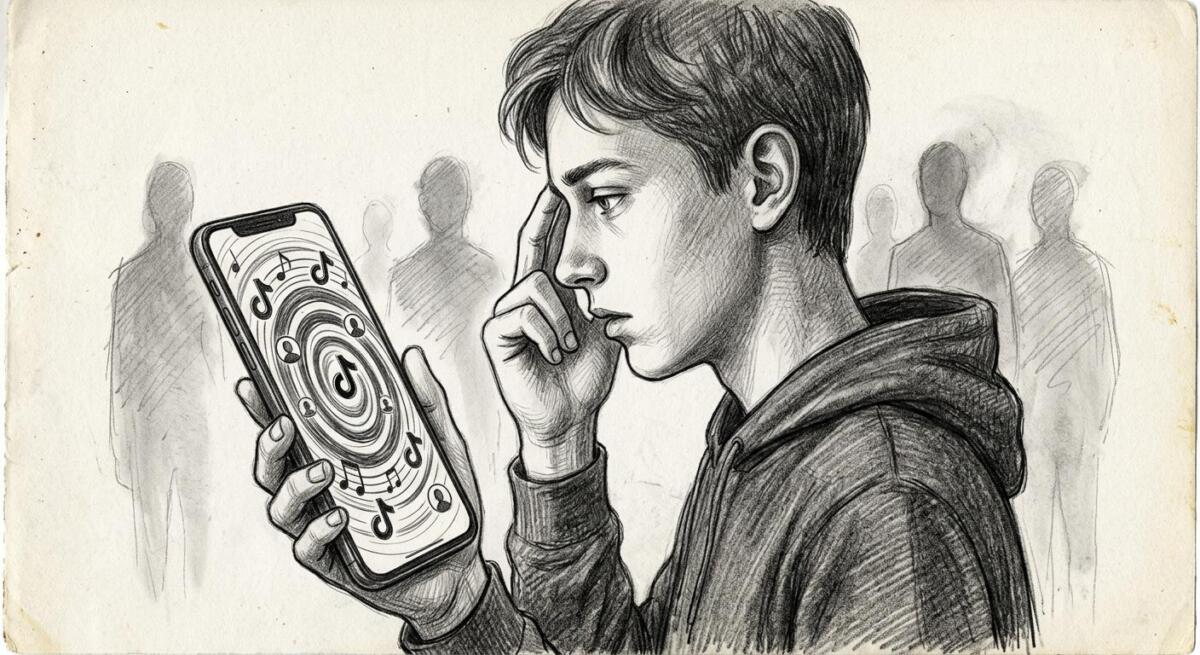
Short videos are perfectly engineered for this exact vulnerability. Each swipe delivers a tiny dopamine hit with zero emotional demand. No need to sit with discomfort, no need to reflect, no need to feel anything real. Just 15 seconds of distraction, then another, then another, until an hour has passed and you’ve absorbed nothing but vibes and trending sounds.
The study calls this “emotional escape,” which is a nice way of saying these platforms have become digital pacifiers for people who never learned how to soothe themselves. And sadly, the platforms know this, and have spent billions optimizing their algorithms to detect when you’re vulnerable and serve you exactly the kind of content that keeps you numb and scrolling.
The Attention Economy Runs on Your Inability to Pay Attention
The research found that strengthening “attentional control”—your ability to focus and resist distractions—can protect against addiction. Great news, right? Except we’re living in an ecosystem specifically designed to destroy that skill.
Every app, every notification, every autoplay feature is built to fracture your focus. TikTok doesn’t want you to develop healthy attention spans. Instagram doesn’t want you to pause and reflect. YouTube Shorts isn’t hoping you’ll log off and go for a walk. Their entire business model depends on you not being able to control your attention.
So when researchers suggest “mindfulness training” and “reducing multitasking” as solutions, they’re technically correct. But they’re also asking individuals to fight billion-dollar attention-harvesting machines with… willpower and breathing exercises. It’s like recommending meditation to someone standing in a casino while slot machines scream at them from every direction.
The study mentions this is especially problematic in cultures like China, where emotional restraint is emphasized. But honestly? Any other culture or country isn’t much better.
What You’re Actually Up Against
The researchers found that attachment anxiety increases addiction risk, partly because it tanks your ability to focus and understand your emotions. But more importantly, these platforms are designed to exploit exactly these vulnerabilities.
TikTok’s algorithm doesn’t care if you have alexithymia. It only cares that you can’t stop watching. The platform doesn’t ask if you’re using it to avoid processing childhood trauma. It just tracks that you watched 47 videos about emotional unavailability and serves you 47 more.
This is what makes modern tech addiction so insidious. It’s not like cigarettes, where the harm is obvious and the industry eventually got regulated. Digital addiction looks like harmless entertainment. It’s just videos, just scrolling, just staying connected. Until suddenly you realize you can’t sit through dinner without checking your phone, can’t process a difficult emotion without reaching for distraction, can’t remember the last time you were genuinely bored instead of algorithmically entertained.
Taking Back Control (Without Burning Your Phone)
Look, if you’re reading this and thinking “oh god, this is me,” you’re not broken. You’re responding exactly how you’ve been conditioned to respond. The platforms spent years and billions of dollars figuring out how to hook you. Of course it worked.
But you can push back. Not by developing superhuman willpower or rejecting technology entirely, but by recognizing what’s happening and making small, deliberate changes. The researchers suggest:
- Setting actual time limits (and sticking to them, which requires deleting apps that make it easy to override limits)
- Creating phone-free periods (start with meals, then expand from there)
- Building routines that encourage emotional reflection (journaling, therapy, talking to actual humans about feelings)
- Practicing focused attention (read a book, have a conversation without checking your phone, literally anything that isn’t algorithmically served content)
None of this is revolutionary. But it’s necessary because the alternative is letting tech companies continue profiting from your emotional deregulation while you slowly lose the ability to feel anything that can’t be processed in 15-second increments.
The study’s authors are right that this “is not only about screen time, but also about emotional and cognitive regulation.” But let’s be honest about why that regulation is so hard to maintain: you’re trying to regulate yourself in an environment specifically engineered to deregulate you. The least we can do is acknowledge that and stop pretending this is all just a personal willpower problem.
Read the original article here if you want to learn more: Struggling to identify emotions may increase vulnerability to TikTok addiction
Read the full study here: From attachment anxiety to short video addiction: the roles of attentional control and alexithymia
Subscribe to our newsletter to get updates delivered to your inbox